
Healing shouldn’t feel like a broken record. Brainspotting uses neuroscience to access the parts of your brain that words can't reach, helping you process trauma at the root so you can finally move forward.
Brainspotting Therapy in
Minnesota & Texas
Deep Healing for Trauma & Self-Esteem,
When talking in circles isn’t working anymore.
Does this sound familiar?
Things are stagnant. You’ve talked about the issues, you understand them, but change seems stuck in place
You have an internal sense that there’s more underneath the surface and you want to access it
The skills you’ve learned are hard to stick to. You ‘know’ what they are, but there’s something holding you back
How Does Brainspotting Work?
Take a look at this 2 minute video to learn more.
What is Brainspotting?
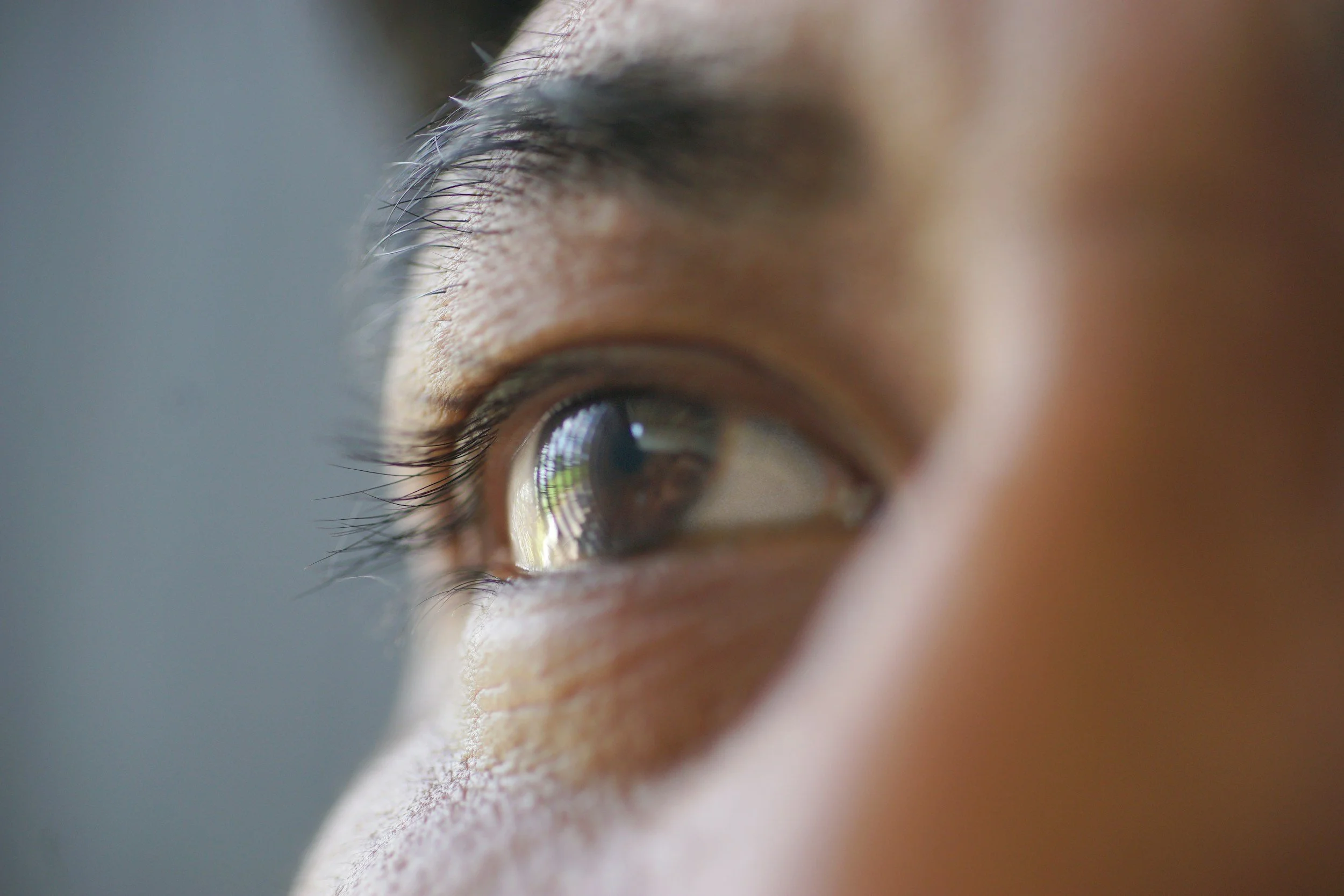
Brainspotting is a brain-based therapy discovered by David Grand, PhD. It works by identifying specific points in your visual field that correlate to where memories and experiences are 'stored' in the body. By focusing on these spots, we can access and process the deep-seated emotions that talk therapy often can't reach.
Simply put: where you look affects how you feel, and we harness that power in session to bring you the kind of relief you’ve been waiting years for.

Think of your brain like a filing cabinet;
Brainspotting helps find the files that were shoved in the back that make it hard to
shut the drawer, and helps you make connections without going through every file.
FAQs about Brainspotting
-
While both are considered "bottom-up" brain-based therapies, EMDR uses rapid eye movement, whereas Brainspotting focuses on a fixed eye position (the "Brainspot") to allow for deeper, more sustained processing of a specific issue. Read more: Brainspotting v. EMDR
-
No. You are fully conscious and in control. It is a focused mindfulness technique that uses your visual field to access the brain's self-healing bypass.
-
As your therapist, I look for reflexive signals: blinks, a deep breath, or a shift in body tension. This tells us we’ve found a point where your brain is holding onto information.
-


Common issues addressed in Brainspotting Therapy
Trauma (abuse, neglect, spousal abuse, relational, pre-verbal, and intergenerational)
Perfectionism and Self-Esteem: negative self-talk, guilt & shame)
Burnout for high-achieving professionals
Anxiety (Panic attacks, chronic anxiety, generalized anxiety- like it’s always with you)
Attachment wounds (childhood, relationship issues)
What can you to expect in a brainspotting session?
-
![Close-up of a small green fern growing between wooden planks on a boardwalk or pier, with blurry water and sky in the background.]()
Focused Environment
We may use tools, like a pointer or biolateral music to help find and guid your gaze. This helps your your brain "map" and access memories that are stored deep within the nervous system.
-
![A flowing mountain stream with dark rocks and green grass along the banks, viewed from a low angle.]()
You Set the Pace
This is your process. You can talk as much or as little as you want. Unlike traditional talk therapy, we aren’t relying on words; we are relying on your brain’s natural ability to process information.
-
![Underwater view showing sunlight filtering through the water surface, with a jellyfish floating beneath.]()
Deep Support, No Pressure
I am here to follow your lead. I provide a supportive "frame" for you while you are healing, stepping in only when you need me and stepping back to allow your body and mind to do the intuitive healing they were designed for.
-
![View through a window showing a balcony with lounge chairs, a white table, pink flowering bushes, distant mountains, and a clear blue sky with a few clouds.]()
Targeted or Open Processing
We can work on a specific "target" memory—something that has weighed on you for years—or we can simply "discover" what feels most active in your body in the present moment.
-
![Close-up of a green shrub with red-spotted leaves growing in front of cut logs or tree stumps in a forest.]()
There is No "Right" Way
There is always more than one Brainspot. You don't have to worry about finding the "perfect" point or doing the technique correctly. Your body (and mind) has an innate ability to heal, and together, we simply create the space for that healing to unfold.




See What People Are Saying….
“I was feeling sad and depressed. A lot of memories were coming up causing me emotional pain and I would cry often with nothing specific triggering it. I didn't know how to deal with my emotions …the session I did with Surabhi was the turning point for me….I would recommend Surabhi's services readily.”
— Former Client
“Surabhi has made my life significantly better. I no longer panic in the middle of the night, I am learning to trust my own life choices, and feel confident moving forward - towards my goals.”
— Client P.
More FAQs about Brainspotting Therapy
-
Absolutely! Brainspotting is very effective via video sessions. We use specific digital tools or simple focal points in your own environment to help you find your "Brainspot" from the comfort of your home.
-
Everyone’s "filing system" is different. Some clients feel a sense of immediate "lightness" or relief after one session, while others may feel tired. Processing in the brain continues on over the next 24–48 hours.
-
When we find a spot, you might feel a sudden "hit" of emotion, a tingling in your body, or simply a deep sense of focus. It feels like you’ve finally put your finger on the exact root of the problem rather than just talking around it.
We have many spots to choose from at any time; you decide which one we work with.
-
Yes! Brainspotting is a non-invasive, client-led process. You are always in the driver’s seat. As your therapist, I am there to "hold the frame" and support your nervous system as it does its natural work of self-scanning and healing.
-
One of the biggest benefits of Brainspotting is that it doesn't require you to retell every detail of painful experiences. Because we are working with the subcortical brain, your system can process the "stuck" energy without you having to find the words for it.